
Search for images or info
Drawing Outlines
Continuously drawing outlines is an excellent way to teach yourself how to create successful images. This is exactly the way I started so I speak from my own experience.
If you really want to learn to draw, somehow or another you will find a way that suits you. Just adapt every bit of advice that you read to suit your needs.
Never give up your aspirations to become an artist - you won't regret it!

Outlining objects is just one method that enables you to kick off your dream to be an artist. There are lots of options available to achieve great images but you only need to find one that you like.
Many of us aspire to illustrate directly onto paper (without grids or other tools) but some of us need extra help in acquiring that ability to see with an artist's eye. I think the practice of copying simple images is one solution.
Everyone can draw...
We all know that the letters of the alphabet were originally pictures or symbols as in this example...
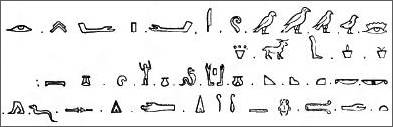
Through the centuries, the pictures or symbols have been gradually reduced to the way we see them today.
When we are young, we are taught to form firm letters through practice and habit.
Printing letters is good preliminary practice for your hand to get used to applying strokes while your eyes grow accustomed to good lines of simple constructive forms.
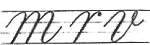
Once printing is mastered, we then progress on to writing, where we gradually build up the forms of the letters.
It's a shame that we don't really notice the artistic qualities in our printing and writing.
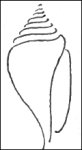
When we try to record the world of complex forms -- nature, animals or humans -- we encounter the problem of how to represent them. For some reason, we make it difficult!
An outline is the earliest mode of expression among primitive people, just as it is with children.
The function of outline is to define the boundaries of form.
As children, we drew the human body with confident strokes, using straight lines and a large round head. We recorded our first impression in outline, without hesitation.
Unfortunately, a good majority of us weren't encouraged to continue representing life in this manner, so we didn't develop any skills along with that inner confidence.
The good news is that you are never too old to learn to draw!
Categories
Sketches
Instruction
Freebies
Other Areas
 Follow me


** Disclaimer: I receive a small commission if you buy via my links -- at no extra cost to you. **
The How To Sketch Guide
Here's a book that finally dispels the mystery of sketching!
... it only takes a little instruction
or guidance... Read more >>
Now In Paperback!
Step by Step
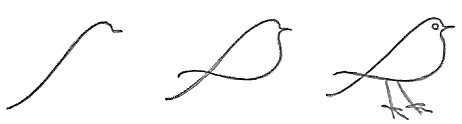
There are various methods you can use to get an outline of any object or figure. To begin with, we can progressively define the form by a series of stages.
For instance, in this profile of a bird, the form can be gradually built up by the combination of lines.
A leaf form is simpler still, put one stroke for the stem and build the form around it.
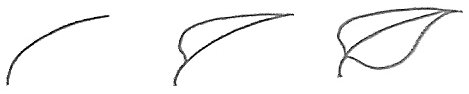
I suppose you could call this the calligraphic method of illustration because it's similar to the way we build up strokes in calligraphy.
By continuously doing outlines, the habit to observe forms becomes imprinted on your mind. Pretty soon, you won't even notice you are doing it and it becomes invaluable to you as you progress and improve.
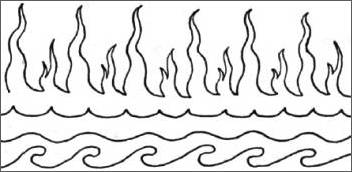
Copy numerous images like the ones above with continuous strokes. Another way to assist your eye is to use vertical center lines to help get the correct outline in place. This observation exercise helps you understand more about symmetrical objects.
The benefits are unlimited when you teach yourself to draw in a way that excites you. Don't mind failures, no-one is immune to them because they are a fact of life. We make mistakes so we can learn from them.
Always remember this, it doesn't matter what you draw, it is the way you see it that matters. I love to see how you interpret things because your artwork will always be unique. It is that difference that keeps me and everyone else intrigued.
Have fun drawing outlines, who knows, you might become the next master of outline!
Outline Methods
I now have a book available on Kindle which shows you 9 different ways to create a successful outline.
Once you master this basic training, you can create outlines spontaneously and start making art that you never knew was inside of you.
A picture works itself out when you have the ability to create a good outline.
The common old feeling of 'Where do I start?' is answered and therefore banished, never to be experienced again!
Thanks to Amazon.com, you get to see the first part of the book, so please pop on over and click on the book cover image to see what's inside.
The whole book is specifically dedicated to drawing outlines. You get just the facts as well as numerous images for a very (ridiculous) low price!
It is available on Amazon for use on a Kindle reader. If you don't have a Kindle reader, there is the option to download a free reader here.
Click a link below to view a good variety of pencil tips:
* Allaboutdrawings.com is a participant in the Amazon Services LLC Associates Program, an affiliate advertising program designed to provide a means for sites to earn advertising fees by advertising and linking to Amazon.com.
Copyright © 2005 - 2024 www.allaboutdrawings.com. All rights reserved.